How to Actually Meet Labels and A&Rs at ADE (2026)
Most ADE networking advice is useless. Where label managers and A&Rs really spend their days during Amsterdam Dance Event, and how to get in front of them.
Quick Answer
Label managers and A&Rs at Amsterdam Dance Event spend their days in a small number of predictable places: the ADE Pro business hubs at venues like Felix Meritis and the Andaz Hotel, structured matchmaking sessions such as Meet the Professionals, and — more than anywhere else — hotel lobbies and cafés between scheduled meetings. They do not spend them on dancefloors. The single highest-yield tactic is booking meetings two to three weeks before ADE using the Pro database and LinkedIn, because most industry calendars are full before the event starts. The second is being physically present in the lobby economy during the day. Cold-approaching someone at 3am in a club is the tactic most artists actually use, and it is the one that works least. Preparation beats presence, and presence beats persistence. Book early, work the daytime, and follow up within 72 hours.
I have been on both sides of this. I have been the producer trying to get a record heard, and I have been the label owner at Underkntrl with people trying to hand me USB sticks. That second experience taught me more about ADE networking than the first one ever did.
Here is what I wish someone had told me before my first ADE.
Where These People Actually Are
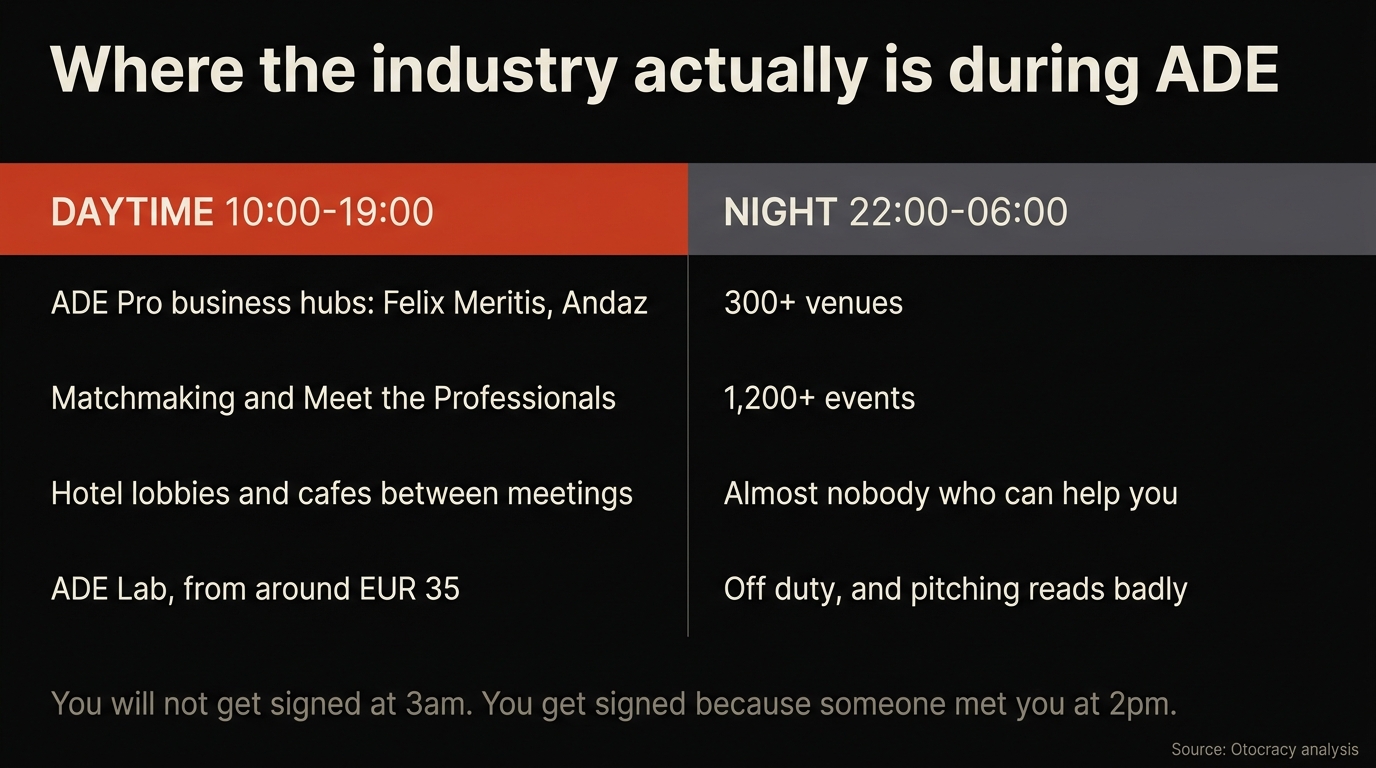 The industry works between 10:00 and 19:00. Plan accordingly.
The industry does not distribute itself evenly across 300 venues. It concentrates.
| Location type | Who is there | Best time | How to get in |
|---|---|---|---|
| ADE Pro business hubs (Felix Meritis, Andaz) | Labels, distributors, tech, publishers | Wed-Sat, 10:00-18:00 | Pro Pass |
| Matchmaking / Meet the Professionals | A&Rs and executives, in structured 1:1 slots | Scheduled sessions | Pro Pass, book slots early |
| Hotel lobbies (Andaz, The Hoxton, and similar) | Everyone, between meetings | All day | Free — walk in, buy a coffee |
| ADE Lab | Emerging-artist programming, demo feedback | Daytime | Tickets from around €35 |
| Media lounges | Press, radio, artists doing interviews | Daytime | Invitation or artist allocation |
| Clubs, 22:00-06:00 | Almost nobody who can help you | Night | Tickets |
That last row is the one people refuse to believe. The head of A&R at a label you want to be on is, at 3am on Friday, either asleep or off duty. In both states, pitching them is counterproductive.
The Lobby Economy
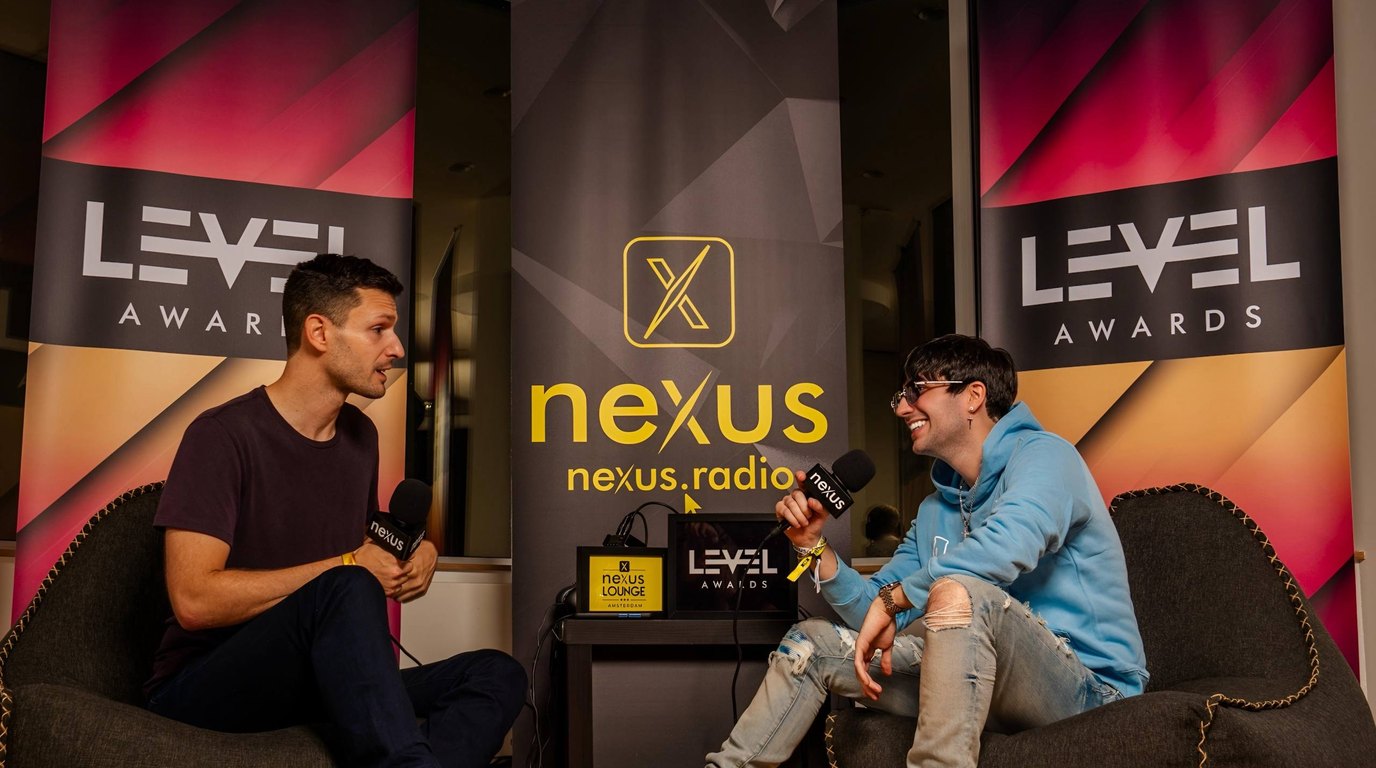 Sitting down, in daylight, with no music playing.
This is the part nobody writes about, and it is where a genuine share of ADE's business happens.
Industry people book meetings back to back during the day. Between meetings they sit somewhere central with a laptop and a coffee, because going back to a hotel room wastes forty minutes. The result is that a handful of lobbies and cafés near the Pro venues fill up with exactly the people you want to meet, all of whom have twenty minutes of dead time.
You do not need a badge to sit in a hotel lobby. You do need a reason to be there and the social judgement not to interrupt someone visibly mid-meeting.
This is where I do most of my own ADE work. It costs the price of a coffee and it puts you in the same physical space as the decision-makers for eight hours a day, which is more than a €725 pass guarantees on its own.
The Timeline That Works
This timeline assumes the label has already heard your record. If it has not, the outreach starts earlier and looks different — that sequence is in how to pitch a label before ADE, and it is the half of the job that decides whether these meetings are worth booking.
Three weeks out — build the list. Five to ten target companies. Realistic ones: labels whose catalogue your record would actually fit, not the three biggest names in your genre. Check what they released this year. If you cannot name three of their recent releases, they are not on your list.
Two to three weeks out — request the meetings. Short message, specific ask, one link. The ADE Pro database exists for this and LinkedIn works fine. What works:
Hi [name] — I make melodic techno, and [specific recent release on their label] is the closest reference point I have for what I'm finishing now. I'll be in Amsterdam for ADE 21-25 Oct. Any chance of 15 minutes on the Thursday or Friday? One track, no pitch deck.
What does not work: "Hi, I'm an artist, would love to connect."
One week out — confirm and cluster. Confirm every meeting and group them geographically. Amsterdam is small but ADE traffic is not; three meetings in three districts will cost you the day.
During — show up early, leave on time. Fifteen minutes means fifteen minutes. Ending a meeting yourself, on time, is a stronger signal than anything you can say in it.
Within 72 hours after — follow up. Track attached, one line about where you met. This is the step that separates artists who convert from artists who collect contacts, and it is almost entirely uncontested because most people do not do it.
What to Actually Say
The pitch that works at ADE is short, specific and does not ask for anything on the spot.
Three things, in this order:
- What you make, in one sentence, using genre language they use. Not "electronic music" — "melodic techno, closer to Afterlife than Drumcode."
- Why them, in one sentence, referencing something real they released.
- The ask, which is small: permission to send one track.
That is it. No streaming numbers unless they are genuinely good, no story about your journey, no laptop opened at the table. The goal of the conversation is not to get signed — it is to earn the right to send an email that gets opened.
Based on 2,400+ campaigns run by our founding team, the single strongest predictor of a demo getting listened to is not follower count. It is whether the sender is a name the recipient already attached to a face.
The Numbers Question
You will be asked what your numbers are. Have an honest answer ready, and understand what they are actually asking.
| What they ask | What they mean | Good answer |
|---|---|---|
| "What are you doing numbers-wise?" | Is there evidence anyone cares? | A real figure, plus save rate or repeat-listener context |
| "Who are you working with?" | Are you managed, agented, already signed? | The truth, briefly |
| "What else have you got?" | Is this a one-track artist? | Two or three finished things, not twelve WIPs |
Inflated numbers are worse than small numbers. Everyone in that room can pull up your profile on their phone, and the ones who can spot purchased streams do it reflexively — our piece on how labels audit for fake streams covers exactly what they look at.
Small and honest beats big and suspicious every time. Based on 2,400+ campaigns run by our founding team, artificial streaming activity is one of the fastest ways to lose a conversation that was otherwise going well.
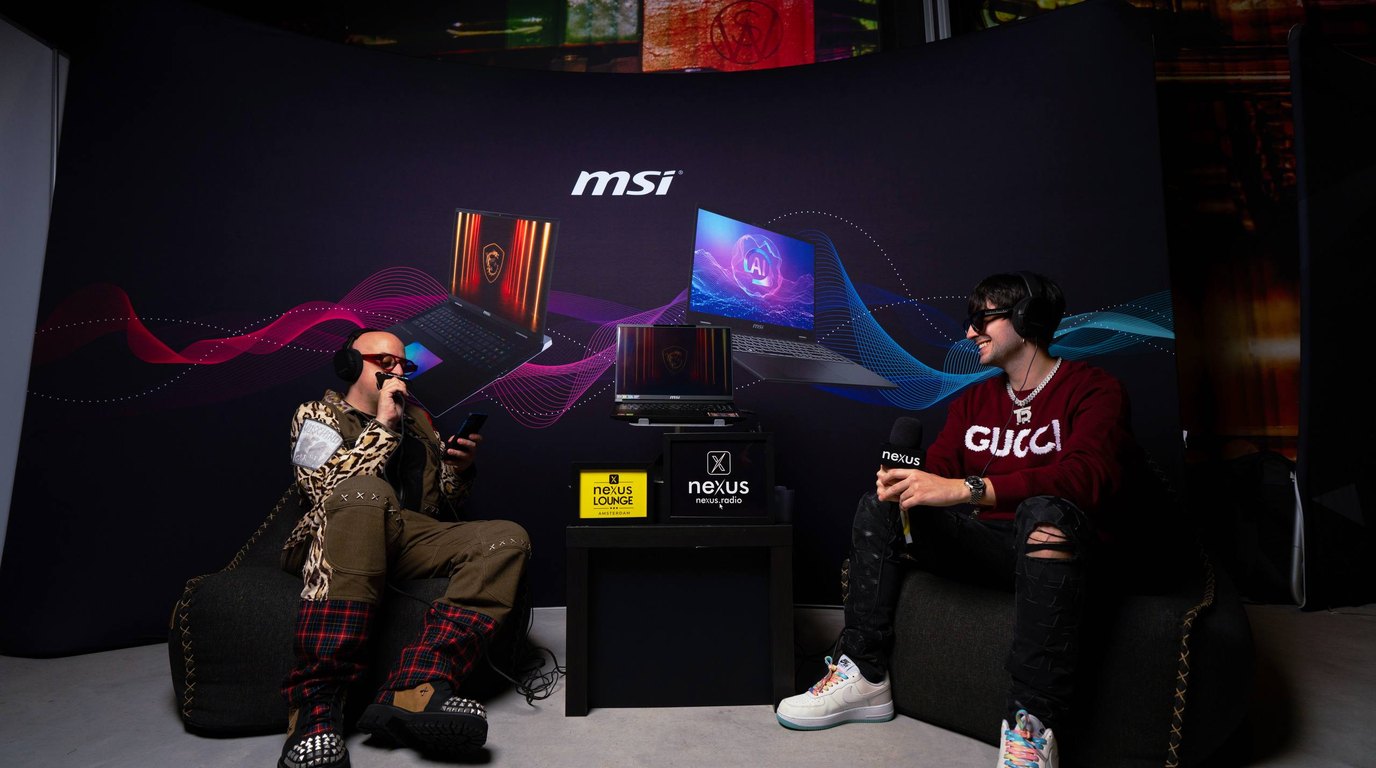
The ŌTOCRACY Artist Pass — Nexus Lounge, ADE 2026. €200, 25 only. The hardest part of ADE networking is having a legitimate reason to be in a room with industry people. A ticket does not give you one; an artist pass does — the Nexus Lounge moves hundreds of established and emerging artists, industry professionals and press through it across the week. Lounge access, a Nexus Radio interview (usually 22-23 Oct), an editorial photoshoot, sponsor freebies, open bar for Ōtocracy members, publication on the Nexus site, amplification across ŌTOCRACY's channels all week, and Thomas on the day handling reception and introductions — the full list is here. I have spent years building these contacts; the point of this is to shortcut you into them. Twenty-five passes, artists selected. See what the pass includes and claim one → — or message me on WhatsApp if you would rather ask first.
Five Mistakes I Watch People Make Every Year
- Handing over a USB stick. Nobody has a laptop with a USB port and forty minutes. Send a link.
- Pitching in a club. Covered above. It reads as not understanding how the industry works, which is itself disqualifying.
- Arriving with no finished music. The most common and the most fatal.
- Talking for six minutes before mentioning what you make. Lead with the music.
- Not following up. Roughly nine in ten of the people I meet at ADE never email me afterwards. The tenth is the one I remember.
Frequently Asked Questions
Where do A&Rs hang out at ADE?
Primarily the ADE Pro business hubs at venues like Felix Meritis and the Andaz Hotel during the day, plus structured matchmaking sessions. Informally, hotel lobbies and cafés near those venues, where people sit between back-to-back meetings. Rarely in clubs at night.
Do I need an ADE Pro Pass to meet labels?
It helps considerably for business hub access and matchmaking, but it is not required. Artists with pre-arranged meetings often work the lobby economy instead, which costs nothing. See our ADE Pro Pass breakdown for whether the €725 makes sense for you.
How do I get meetings before ADE?
Use the ADE Pro database and LinkedIn two to three weeks in advance. Send a short message naming one specific release of theirs, stating your genre plainly, and asking for fifteen minutes on a named day. Generic connection requests do not convert.
Should I give out USB sticks or business cards at ADE?
Neither converts well. Send a private streaming link instead. The realistic goal of any ADE conversation is permission to email one track afterwards, not to have your music consumed on the spot.
What if I have no streaming numbers?
Be honest about it and lead with the music. Inflated or purchased numbers are actively harmful, because A&Rs check profiles reflexively and can spot artificial streaming patterns. A small honest figure with a good save rate reads better than a large suspicious one.
ADE networking is not a personality contest and it is not a numbers game. It is a preparation game: a realistic list built in September, ten short messages sent in early October, four conversations on the Thursday and Friday, and four emails sent on the Monday. Artists who run that sequence get results almost regardless of how extroverted they are. Artists who improvise get photographs.
Once a label does say yes, the work shifts to making the release land — our campaign packages handle the promotion side, and the free audit will tell you where your profile stands before anyone asks.