First Time at ADE as an Artist: The 5-Day Checklist
A practical checklist for your first Amsterdam Dance Event as an artist: what to prepare before you fly, what to do each day, what to send the week after.
Quick Answer
Your first Amsterdam Dance Event goes well or badly based almost entirely on work done before you land. The checklist has four phases: six weeks out, finish and master the record and book accommodation before ADE-week pricing bites; three weeks out, build a list of five to ten realistic target labels and send short, specific meeting requests; during the week, protect the daytime, cap yourself at two big nights, and take notes after every conversation; within 72 hours after, email every contact with the track attached. ADE 2026 runs 21-25 October, with Thursday and Friday carrying the most business. Budget €1,500-2,500 for the week. The most common first-timer failure is not being unprepared socially — it is arriving with unfinished music, and therefore nothing to send when a conversation actually goes well. Finish the record first; everything else on this list depends on it.
My first ADE was a mess. I went to everything, slept four hours a night, met a lot of people I never contacted again, and came home convinced the week was overrated. It was not overrated. I just had no system.
This is the system, in checklist form. Work through it in order.
Six Weeks Out
- Finish the record. Mastered, not "nearly there." This is the item everything else depends on.
- Book accommodation. ADE week is peak Amsterdam pricing — €60-120 a night for a hostel bed, €200-300 for a hotel. The same room costs meaningfully more in October than in August.
- Book flights. €200-600 depending on origin and lead time.
- Decide on a pass. ADE Pro Pass is €725 plus fee; ADE Lab tickets have historically started around €35. Our Pro Pass breakdown covers which one you actually need.
- Send the pitches. If a label has not heard your track before you land, the meeting starts from zero. The six-week pitch calendar counts back from 21 October.
- Set your objective. Write one sentence: what would make this trip a success? "Three conversations with A&Rs at labels releasing melodic techno" is an objective. "Networking" is not.
Three Weeks Out
- Build the target list. Five to ten companies. Realistic ones — labels whose catalogue your record genuinely fits. If you cannot name three of their recent releases, remove them.
- Prepare the link. A private streaming link that loads fast on mobile with bad reception. Not a WeTransfer, not a 400MB WAV.
- Write the one-sentence pitch. What you make, in genre language they use. "Melodic techno, closer to Afterlife than Drumcode" beats "electronic music" every time.
- Send the meeting requests. Short, specific, naming one of their actual releases, proposing a named day. Most ADE meetings are booked before ADE.
- Check your profile. Everyone you meet will look you up on their phone within an hour. Make sure what they find is current and honest — the free audit shows you what they will see.
One Week Out
- Confirm every meeting. Silence is not confirmation.
- Cluster geographically. Group meetings by district. Amsterdam is compact but ADE traffic is not.
- Pick your two nights. Two big events across five days. Choose now, before FOMO chooses for you.
- Download the ADE app and check the programme for anything in your lane — panels, Lab sessions, showcases.
- Charge everything, twice. A dead phone at 4pm on Thursday costs you the contacts you made that morning.
The Five Days
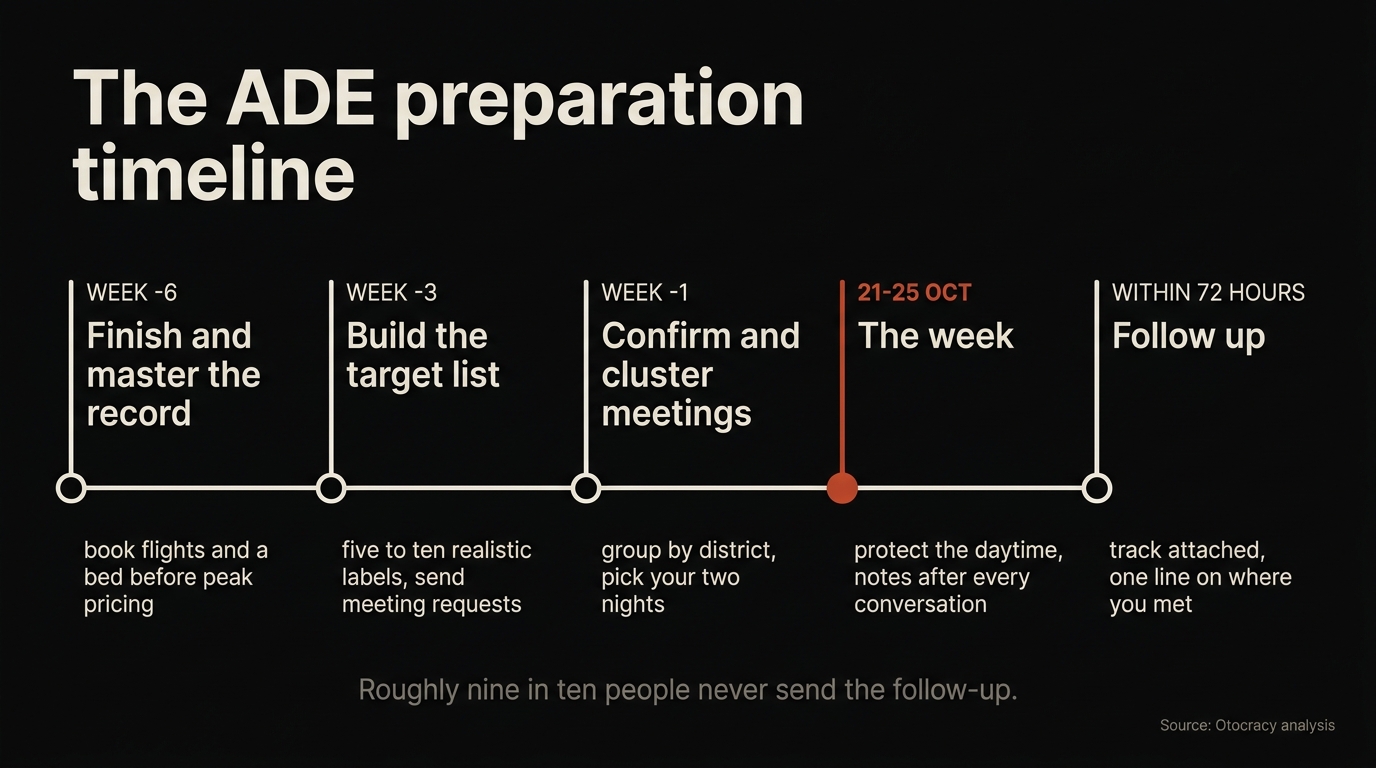 The week is won in September and on the Monday after.
ADE 2026 runs Wednesday 21 to Sunday 25 October.
| Day | Priority | Do not |
|---|---|---|
| Wed 21 | Arrive, collect pass, walk the Pro venues, easy first meetings | Do not go hard on night one |
| Thu 22 | Your best meetings. Peak business day | Do not schedule anything after midnight |
| Fri 23 | Panels in your lane, matchmaking, media and interviews | Do not skip lunch — you will regret it by 16:00 |
| Sat 24 | Follow-ups with people you actually connected with | Do not start new cold approaches; consolidate |
| Sun 25 | Closing programme, quiet coffees. Often the best conversations of the week | Do not fly out at 09:00 and miss it |
Daily habits that matter
- Write notes after every conversation. Name, company, what you talked about, what you promised. You will not remember on Monday. Nobody does.
- Eat properly. Unglamorous and decisive. The artists still functional on Saturday are the ones who ate on Wednesday.
- Leave the club before you stop being useful. The industry is not working at 4am, and neither are you the next morning.
- Ask people what they are looking for. It is a better question than telling them what you have, and it produces information you can act on.
The 72 Hours After
 Everything useful I have done at ADE was prepared before I landed.
This is where the week is actually won, and it is the phase almost everyone skips.
- Email every contact within 72 hours. One line about where you met, the track attached, no pitch deck.
- Deliver anything you promised. If you said you would send something, send it.
- Connect on LinkedIn with a one-line reminder, not a blank request.
- Log the contacts somewhere permanent. Notes app is fine. Your memory is not.
- Book the November follow-up with anyone who suggested a next step.
Based on 2,400+ campaigns run by our founding team, follow-up discipline is one of the most reliable predictors of whether an introduction ever turns into anything — and at ADE specifically, roughly nine in ten people I meet never email afterwards. Being the tenth is not hard, it is just uncontested.
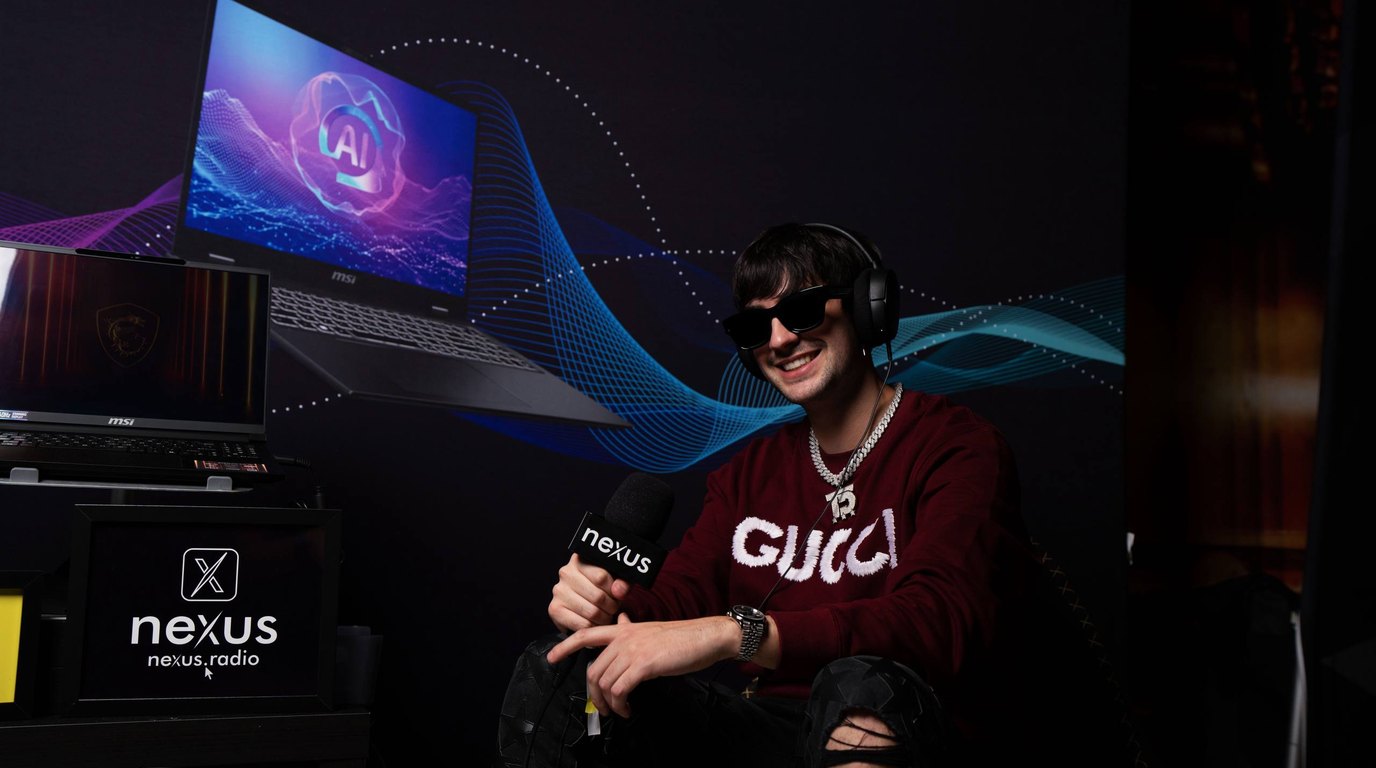
The ŌTOCRACY Artist Pass — Nexus Lounge, ADE 2026. €200, 25 only. If this checklist has a weak point for a first-timer, it is the middle: you have prepared everything and still have no natural reason to be in a room with industry people. An artist pass fixes exactly that. Lounge access, a Nexus Radio interview (usually 22-23 Oct), an editorial photoshoot, sponsor freebies, open bar for Ōtocracy members, publication on the Nexus site, amplification across ŌTOCRACY's channels all week, and Thomas on the day handling reception and introductions — the full list is here. First ADE, in the room as an artist rather than an attendee, with a published interview and a set of press photos at the end of it. Twenty-five passes, artists selected. See what the pass includes and claim one → — or message me on WhatsApp if you would rather ask first.
What to Pack
Short list, because the long ones are useless.
| Item | Why |
|---|---|
| Comfortable shoes | You will walk 15km a day. This is not a joke |
| Power bank | Your phone is your contact list, map, ticket and portfolio |
| A jacket that works in rain | Late October in Amsterdam, single digits to low teens Celsius |
| Earplugs | Five nights of loud rooms; protect the thing your career depends on |
| Something to write on | Notes after conversations, ideally not on the phone you are also using |
Leave the USB sticks at home. Nobody has a laptop free to read them, and the ask reads as unfamiliar with how the industry works.
The One Mistake to Avoid
Treating ADE as five nights out with some meetings attached, instead of four working days with two nights attached.
Based on 2,400+ campaigns run by our founding team, the difference between a campaign that returns and one that does not is rarely the spend — it is whether the person running it protected the part that actually produces results. ADE is the same problem in physical form.
Everything expensive about the week — the flight, the room, the pass — is justified by the daytime. The nights are the reward, and they are genuinely extraordinary. But if you invert the priority, you will spend €2,000 to attend parties you could have attended for €400 in your own city.
For the full context on what the week is and how it is structured, start with our ADE 2026 artist's guide, and if you are still deciding whether to commit the budget, the honest cost breakdown does the math.
Frequently Asked Questions
What should I prepare before my first ADE?
Finished mastered music, a fast-loading private streaming link, a target list of five to ten realistic labels, a one-sentence genre pitch, and meeting requests sent two to three weeks in advance. Accommodation and flights should be booked around six weeks out.
Which days of ADE matter most for artists?
Thursday and Friday carry the most business activity. If budget limits you to three nights, arrive Wednesday and leave Saturday. Sunday's quieter closing programme often produces the best unhurried conversations of the week.
How many parties should I go to at ADE?
Two big events across five days is a sensible cap for anyone attending to work. The nights are excellent and the industry is not awake for them; energy spent after midnight comes directly out of the following day's meetings.
What do I do if I meet someone important unexpectedly?
Give the one-sentence pitch, ask for permission to send one track, get their email or connect there and then, and end the conversation yourself. Then write a note immediately. Do not attempt a full pitch on the spot.
How soon should I follow up after ADE?
Within 72 hours, without exception. Send the track, remind them where you met in one line, and keep it short. Most people never follow up at all, which makes prompt follow-up one of the cheapest advantages available.
A first ADE is not won by being the most outgoing person in the room. It is won by arriving with a finished record, a short realistic list, and the discipline to protect your daytime and send five emails on the Monday. Do that and the week pays for itself. Skip the preparation and no amount of energy in October will rescue it.
Once a conversation turns into a release, the next problem is making it land — our campaign packages cover the promotion side, and the Netherlands market guide is worth reading before you land if the Dutch market is part of your plan.