Is ADE Worth It for Artists? The Honest Cost Breakdown
ADE costs an artist 1,500-2,500 euro for the week. The full line-by-line breakdown, what the money returns, and the five profiles it is worth it for.
Quick Answer
Attending Amsterdam Dance Event costs an independent artist roughly €1,500-2,500 for the week: €725 plus fee for an ADE Pro Pass, €100-200 per night for individual event tickets, €60-300 per night for a bed, €200-600 for flights, and €200-400 on food and transport. That is a real campaign budget. Based on 2,400+ campaigns run by our founding team, €2,000 is what a serious multi-platform release push costs — so ADE has to beat that, not merely be enjoyable. It does beat it for artists with finished music, a specific target list, and meetings booked before they fly. It loses badly for artists who arrive with an unfinished record and no plan, which is most of them. The variable that decides it is preparation, not talent and not budget — and the single largest controllable cost is how early you book flights and a bed.
The question in the title is usually asked the wrong way. "Is ADE worth it" has no general answer, the same way "is a €2,000 ad campaign worth it" has no general answer. It depends entirely on what you put into it and what you are measuring.
So this piece does what we do with any spend: itemise the cost, define the return, and identify the conditions under which the math works.
The Full Cost, Line by Line
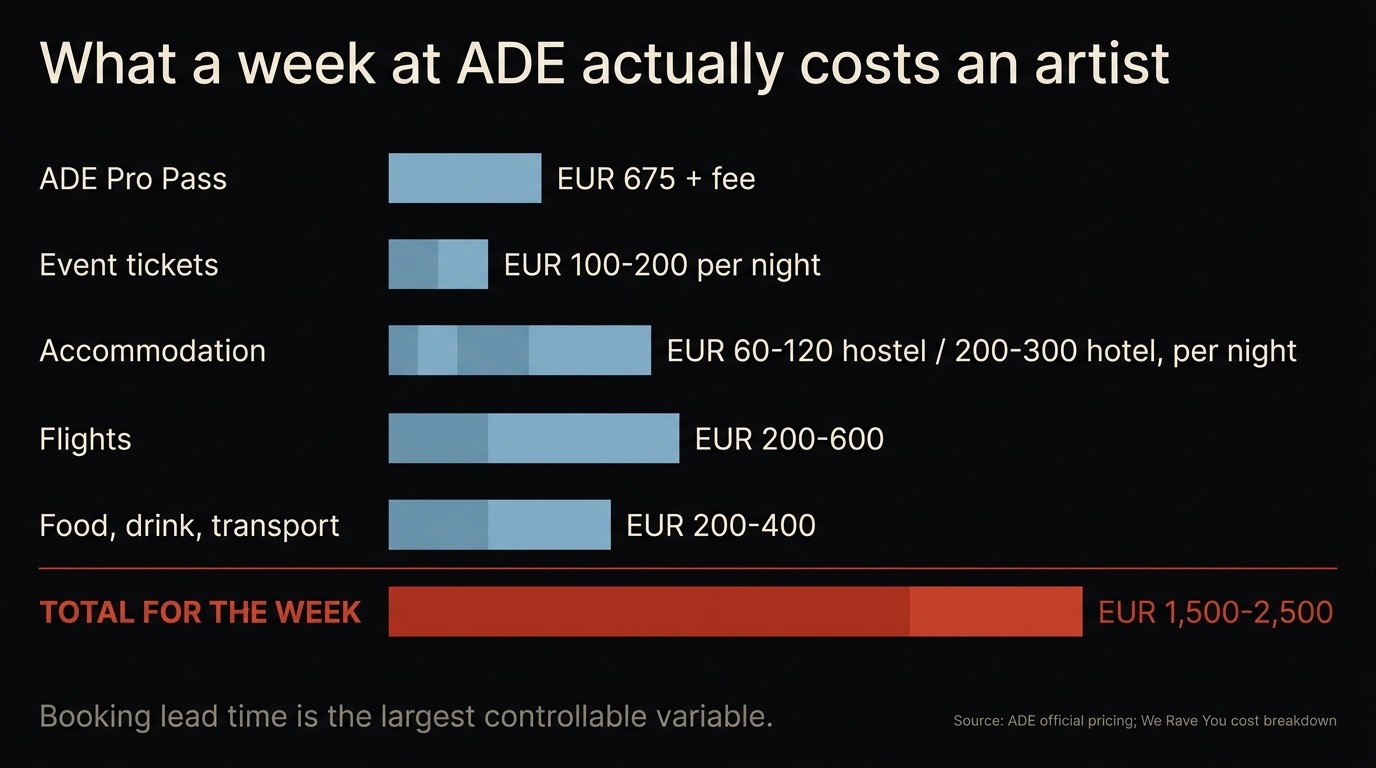 The week costs what a serious release campaign costs. It has to beat one.
| Line item | Low | High | Notes |
|---|---|---|---|
| ADE Pro Pass | €725 | €725 + fee | Official price, 4 Sep 2026. Was €675 on an earlier tier |
| ADE Lab tickets (alternative) | €35 | — | Cheapest legitimate route into day programming |
| Event tickets | €100 | €200 per night | Sold by promoters, not ADE |
| Accommodation | €60/night hostel | €300/night hotel | ADE week is peak Amsterdam pricing |
| Flights | €200 | €600 | Origin and booking lead time dominate |
| Food, drink, local transport | €200 | €400 | Five days, city centre |
| All-in for the week | €1,500 | €2,500 | Consistent with We Rave You's breakdown |
Two notes on this table.
First, the Pro Pass is the single largest controllable line. It buys the conference tracks, business hubs, matchmaking, the year-round Pro database, festival access and the anniversary bag. Whether that is money well spent is its own question — we take it apart in the ADE Pro Pass breakdown.
Second, accommodation is where most budgets actually blow up, because people book late. The difference between booking in August and booking in October is frequently €500 on the same room.
What the Money Has to Beat
Here is the comparison nobody makes, and it is the only one that matters.
| €2,000 spent on | What it reliably produces |
|---|---|
| A multi-platform release campaign | Measurable reach, save-rate data, playlist and creator pickup, a repeatable asset |
| ADE, unprepared | Photos, a hangover, three business cards, no follow-up |
| ADE, prepared | 3-8 real industry conversations, press or content assets, contacts that persist for years |
The middle row is the default outcome. That is not cynicism — it is what happens when you drop someone into a city with 1,200 events and no plan.
The bottom row is achievable, but it requires work that happens in September, not October.
The Five Profiles It Is Worth It For
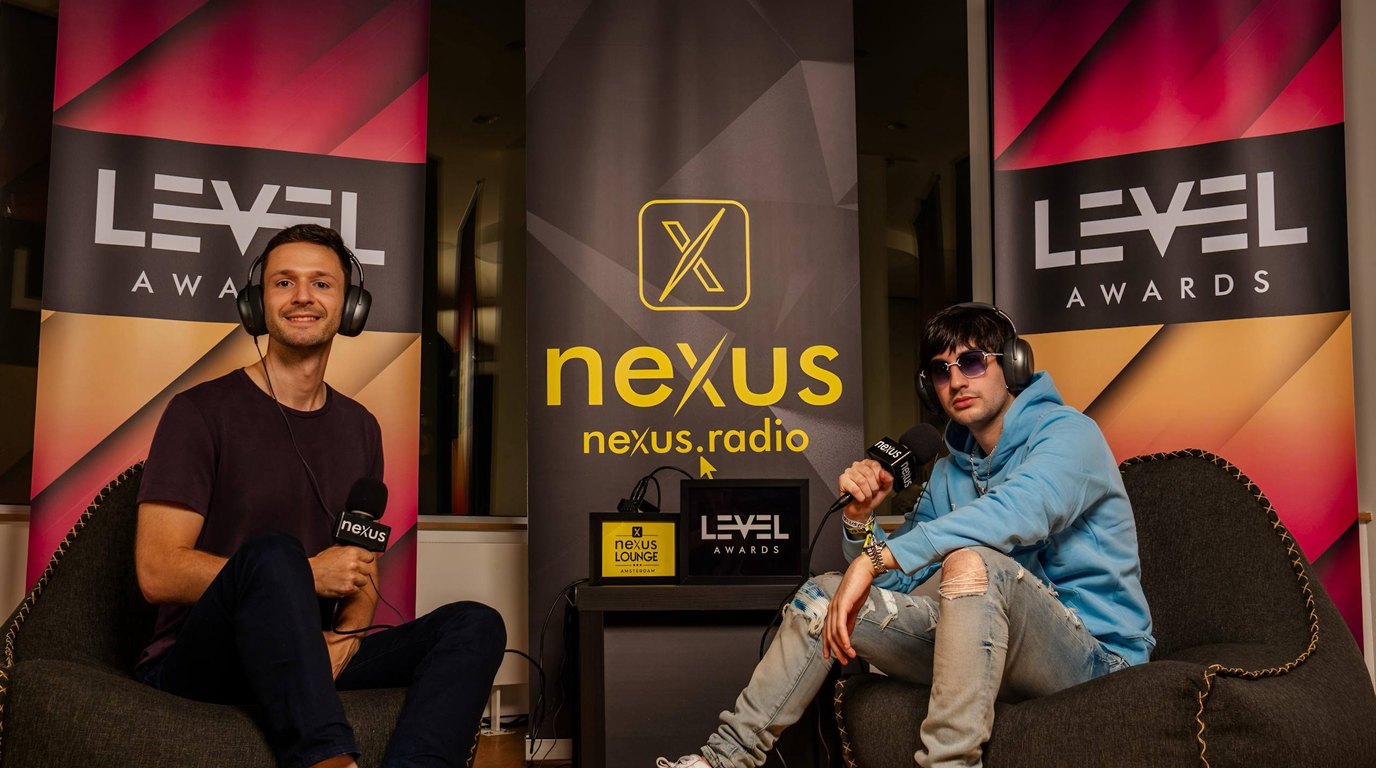 The interview chair: an asset you still own in December.
1. The artist with a finished, unreleased record. You have something mastered and unsigned, and your goal is placement. ADE compresses six months of email into four days of conversations. This is the strongest case, and it collapses entirely if the record is not actually finished.
2. The artist already in conversation with a label. You have an email thread that has gone quiet. Meeting in person converts stalled threads at a rate nothing else matches. If you have two or three of these, ADE pays for itself on that alone.
3. The artist who needs assets more than contacts. Interviews, editorial photos, published features — content that makes a profile look established. This has real downstream value on every campaign that follows, because credibility affects conversion on paid promotion just as much as creative does.
4. The label or manager, not the artist. If you run a roster, ADE is unambiguously worth it, because the meetings scale across every act you represent rather than one. Our label marketing guide covers how roster-level economics change these calculations.
5. The artist releasing into the Dutch or wider European market. ADE is the annual summit of a home market for dance music. If your next campaign targets the Netherlands, the market intelligence alone justifies part of the trip — see our Netherlands promotion guide for what that market actually rewards.
The Three Profiles It Is Not Worth It For
1. The artist with no finished music. You cannot follow up on a conversation with a work in progress. Spend the money on finishing the record.
2. The artist who wants "exposure". Exposure is not a mechanism. If you cannot name the specific outcome you want and the specific people who can grant it, the trip will not produce one.
3. The artist whose entire annual budget this is. If €2,000 is everything you have for the year, a release campaign with measurable output is a better use of it than five days of possibility. Our budget breakdown of what €500, €1K and €5K actually buy sets out the alternative honestly.
The Cheap Version
There is a middle path most people never consider, and the math on it is much friendlier.
You do not have to buy the Pro Pass. ADE Lab tickets have historically started around €35, individual event tickets are bought à la carte, and the hotel-lobby economy — where a large share of real business happens — is not ticketed at all. Felix Meritis, the Andaz, The Hoxton: people sit in those spaces all day between meetings.
| Approach | Rough cost | Best for |
|---|---|---|
| Full Pro Pass week | €1,500-2,500 | Artists doing volume meetings, labels, managers |
| Lab tickets + selective nights | €700-1,200 | First-timers testing whether the week works for them |
| Lobby-and-lounge only, no ADE passes | €500-900 | Artists with pre-booked meetings and an artist pass to a media lounge |
That third row is the one experienced people quietly use. It works because the value was never in the badge — it was in being in the city with a reason to be met.
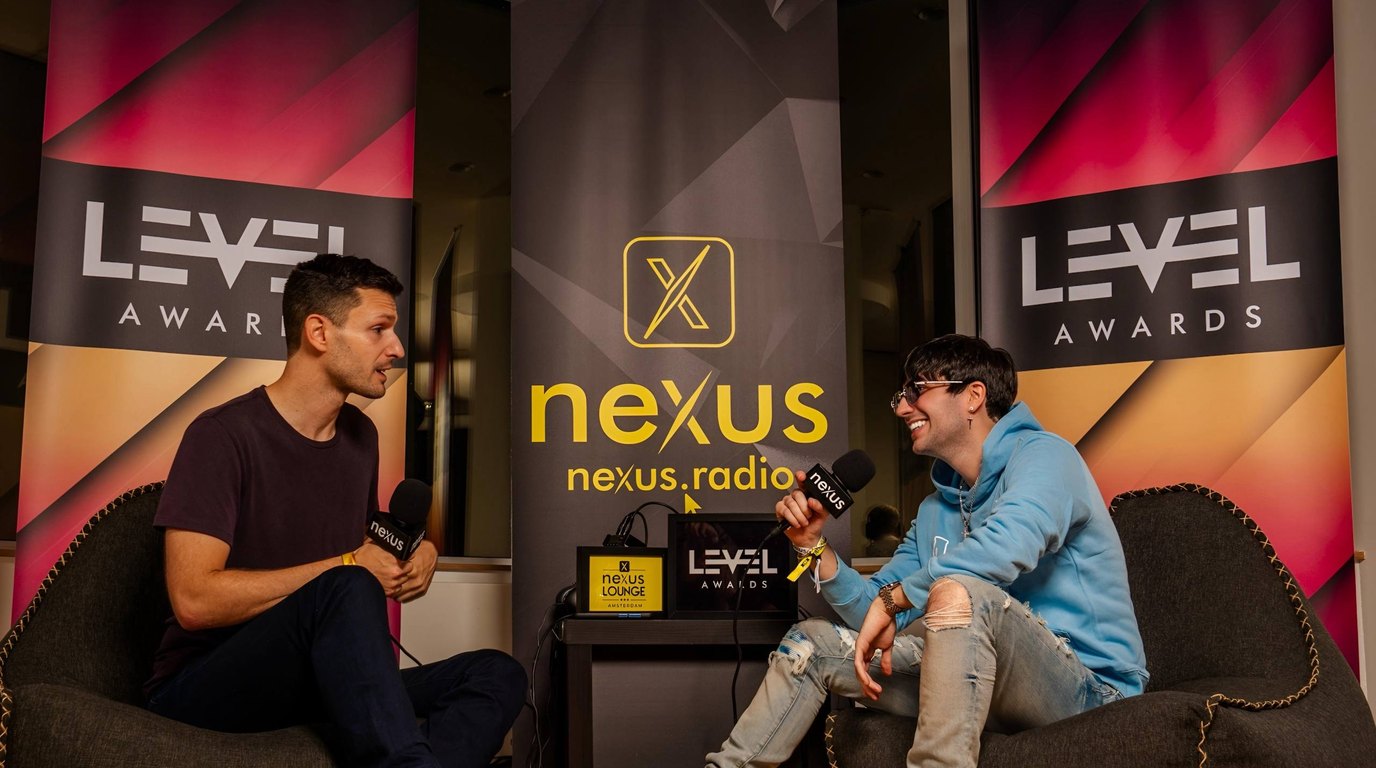
The ŌTOCRACY Artist Pass — Nexus Lounge, ADE 2026. €200, 25 only. This is the third row, packaged — and a different category from anything in the cost table above. Those are tickets to attend. This is an artist visibility and networking package with content production built in. Lounge access, a Nexus Radio interview (usually 22-23 Oct), an editorial photoshoot, sponsor freebies, open bar for Ōtocracy members, publication on the Nexus site, amplification across ŌTOCRACY's channels all week, and Thomas on the day handling reception and introductions — the full list is here. It does not compete with a €725 Pro Pass, because it answers a different question — not "how do I get in" but "why would anyone want to meet me once I am". Twenty-five passes, artists selected. See what the pass includes and claim one → — or message us on WhatsApp if you would rather ask first.
How to Measure Whether It Worked
Set the metric before you fly, because afterwards everyone rationalises.
Reasonable ADE success metrics for an independent artist:
- Three or more substantive conversations with named target companies — not business cards, conversations where your music came up.
- At least one published asset with your name on a third-party domain — an interview, a feature, a photo set.
- A follow-up sent within 72 hours to every contact, with the track attached.
- One concrete next step agreed with at least one contact: a demo submission window, an intro to someone else, a call in November.
Hit three of four and the €2,000 was a better investment than the equivalent ad spend. Hit none and you bought a holiday.
Based on 2,400+ campaigns run by our founding team, the campaigns that underperform are almost never the ones with the wrong budget — they are the ones with no defined outcome. A trip behaves identically.
One thing worth settling before the money question: the trip only pays if labels have heard you first. The six-week pitch calendar is the cheapest part of the whole exercise and the one that decides the rest.
Two Things That Change the Affordability Maths
The cost table above is the sticker price. Two 2026 mechanisms move it.
Three instalments. ADE now supports paying the Pro Pass in three parts via Klarna in the EU or PayPal in the US. That does not make it cheaper, but it moves the pass out of competition with the flight — which, for most artists deciding in September, is the actual constraint.
Group pricing exists and is unpublished. ADE offers a personal Pro Pass discount to companies attending together, arranged by contacting them rather than listed on the ticket page. Two artists from the same label, a manager plus an artist, or three people from one agency should ask before buying individually. The worst outcome is the list price you were going to pay anyway.
Neither changes the verdict for an artist with no meetings booked. Both change it for one who has done the preparation and is short on cash flow rather than short on reason.
Frequently Asked Questions
How much does ADE cost in total?
Budget €1,500-2,500 for the week as an artist. The ADE Pro Pass is €725 plus fee, accommodation runs €60-120 a night for a hostel bed or €200-300 for a hotel, flights are €200-600, and individual event tickets are €100-200 per night.
Is the ADE Pro Pass necessary?
No. It is necessary for volume daytime meetings and business hub access. Artists with a handful of pre-arranged meetings often skip it, use ADE Lab tickets from around €35, and work the hotel lobbies where much of the informal business happens anyway.
Can an unsigned artist get value from ADE?
Yes, on one condition: finished music and a defined target list. Unsigned artists with something mastered and ready to send convert ADE conversations into releases. Unsigned artists arriving with works in progress do not, because there is nothing to follow up with.
Is ADE better than spending the money on promotion?
For most artists, a €2,000 release campaign produces more measurable output. ADE wins when you have stalled label conversations to revive, a finished record needing placement, or a need for credibility assets that paid promotion cannot buy.
When should I book to keep costs down?
Immediately. Amsterdam accommodation during ADE week routinely costs €500 more booked in October than in August for the same room, and the Pro Pass itself has already risen from €675 to €725 as tiers closed. Booking lead time is the single largest controllable cost variable.
ADE is worth it for artists who treat it like a campaign: defined objective, prepared assets, booked meetings, measured outcome. It is not worth it for artists treating it as an experience they hope pays off, and the second group is considerably larger than the first. The €2,000 is not the risk — the unprepared week is.
Before you commit the budget, run the free audit and see what your profile looks like to the people you are about to meet. If the answer is "not ready yet", spend the money on a release campaign and go next year with something finished.