How Artists Get Press and Interviews During ADE
Editorial coverage during Amsterdam Dance Event is not luck. The routes that work for emerging artists, what each costs, and how to be worth interviewing.
Quick Answer
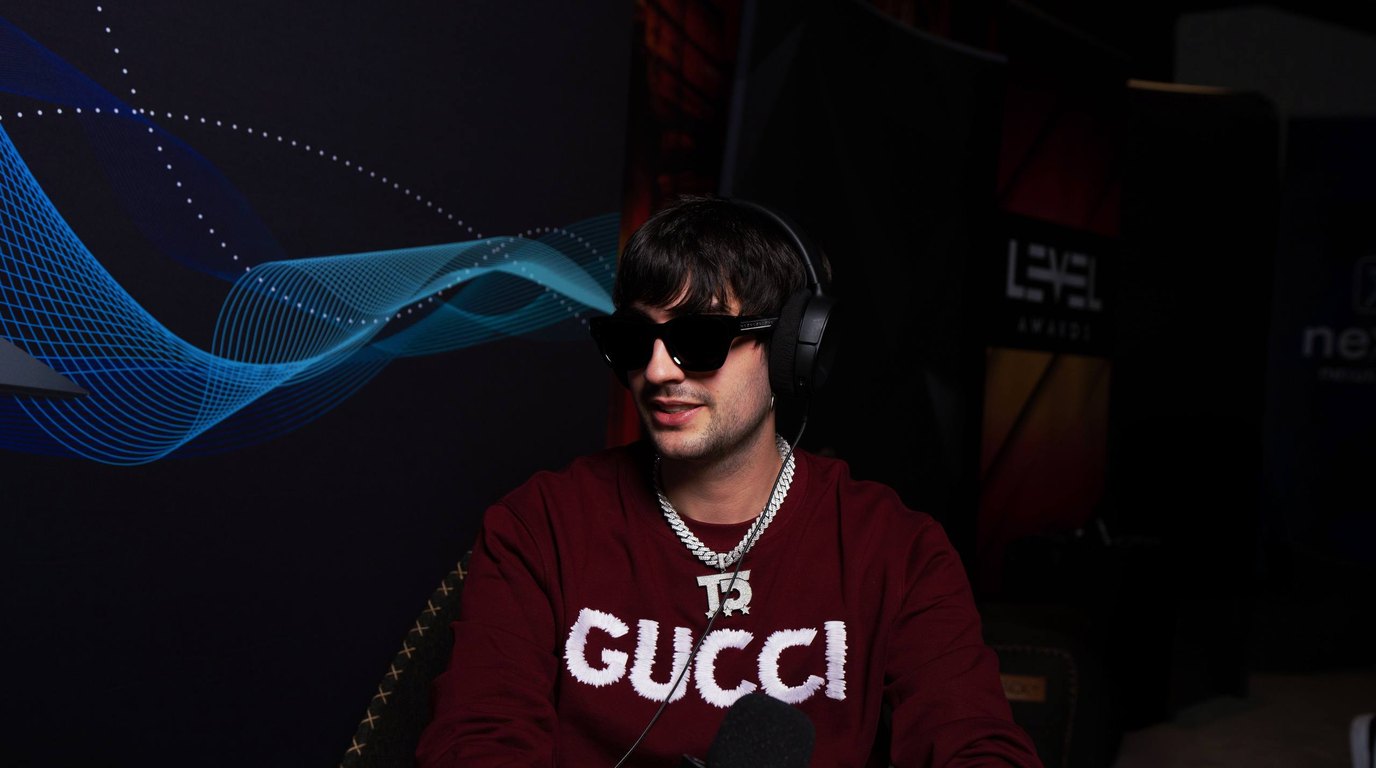
Press coverage during Amsterdam Dance Event goes overwhelmingly to artists who arranged it in advance, not to artists who were interesting on the day. There are four realistic routes for an emerging act: media lounges that record interviews on site, outlet pitching four to six weeks ahead of the week, showcase performances that come with editorial coverage attached, and being useful to a journalist who needs a quote on a story they are already writing. The Nexus Lounge is an example of the first category — a Nexus Radio media lounge that has run inside ADE's official programme in previous editions, recording interviews with artists across the week. What makes coverage valuable is not the traffic it sends. It is the durable third-party asset: a published interview on an established domain that still supports your credibility in February.
I have sat in the interview chair at ADE more than once, and I have also watched a lot of artists spend five days in Amsterdam and come home with nothing published anywhere. The difference is almost never talent.
Editorial coverage at ADE is a logistics problem disguised as a talent problem.
Why Press During ADE Is Worth Chasing
Three reasons, and only the third one is really about press.
1. Concentrated attention. For five days, every outlet covering electronic music is producing ADE content. Their appetite for material is higher than at any other point in the year, which means the bar for getting covered is temporarily lower.
2. Content you actually own. Editorial photos, an interview recording, a published feature. These are assets you reuse for a year — on your profile, in pitch emails, on a press page.
3. Credibility that compounds into everything else. This is the one artists underrate. A third-party publication with your name on it changes how every subsequent conversation goes: with labels, with bookers, and with audiences. Based on 2,400+ campaigns run by our founding team, perceived legitimacy affects conversion on promotion as much as creative does — an artist who looks established converts attention into follows at a visibly different rate than one who does not.
The Four Routes That Actually Work
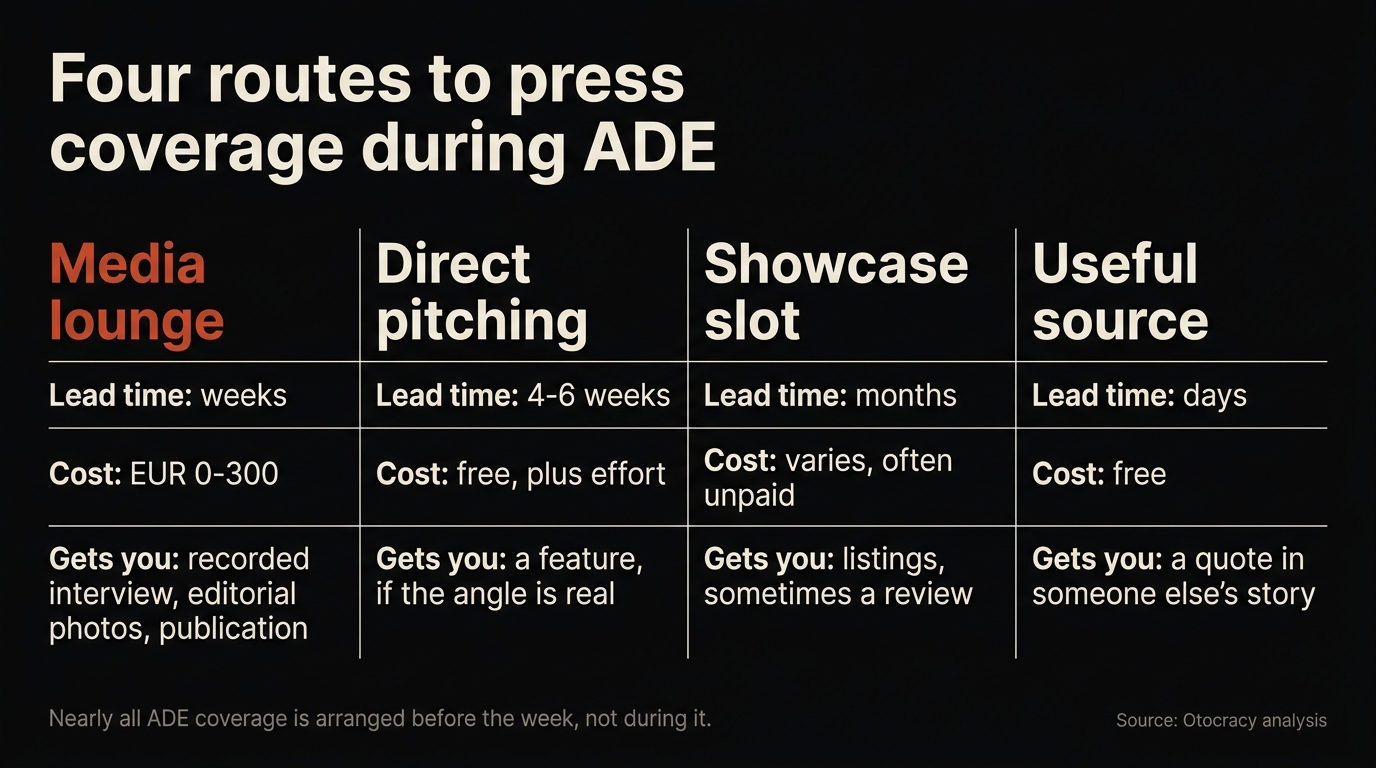 Nearly all ADE coverage is arranged before the week, not during it.
| Route | Lead time | Realistic cost | What you get |
|---|---|---|---|
| Media lounge slot | Weeks | €0-300 depending on access | Recorded interview, editorial photos, publication |
| Direct outlet pitching | 4-6 weeks | Free, plus effort | A feature, if the angle is genuinely newsworthy |
| Showcase performance | Months | Varies, often unpaid | Listings, sometimes review coverage |
| Being a useful source | Days | Free | A quote in someone else's story |
1. Media lounges
Media lounges are pop-up studios that run during ADE, recording interviews with artists across the week. Nexus Radio's Nexus Lounge is the one I know best — it has run inside ADE's official programme in previous editions, with sponsor pop-up studios from names like Technics, KEF, MSI, Climax and Zoku, and interviews with artists including Lucas & Steve, Mark Sixma, Linney and Lucky Luke.
The value is that the entire production exists already. You are not persuading anyone to build a shoot — you are taking a slot in one that is running regardless. That is why it is the most accessible route for an artist without a PR budget.
2. Pitching outlets directly
This works, but only with a real angle and real lead time. Four to six weeks out, because ADE editorial calendars fill early.
What is not an angle: "I'm an artist attending ADE." So is everyone.
What is an angle: a genuine first (first release on a notable label, first time playing the city), a data story, a strong opinion on something the outlet already covers, or a personal story with a hook that is not about you being a musician.
3. Showcases
Playing an ADE showcase gets you into listings and occasionally into reviews. The catch is that showcase slots are typically arranged months ahead through promoters or labels, which makes this the least accessible route for someone deciding in August.
4. Being useful to a journalist
Underrated and free. Journalists covering ADE are writing stories all week and frequently need someone to say something specific and quotable. If you have a real perspective — on gate tools, on booking economics, on what a genre is doing right now — being reachable and articulate can put you in a piece you had nothing to do with commissioning.
What Makes You Worth Interviewing
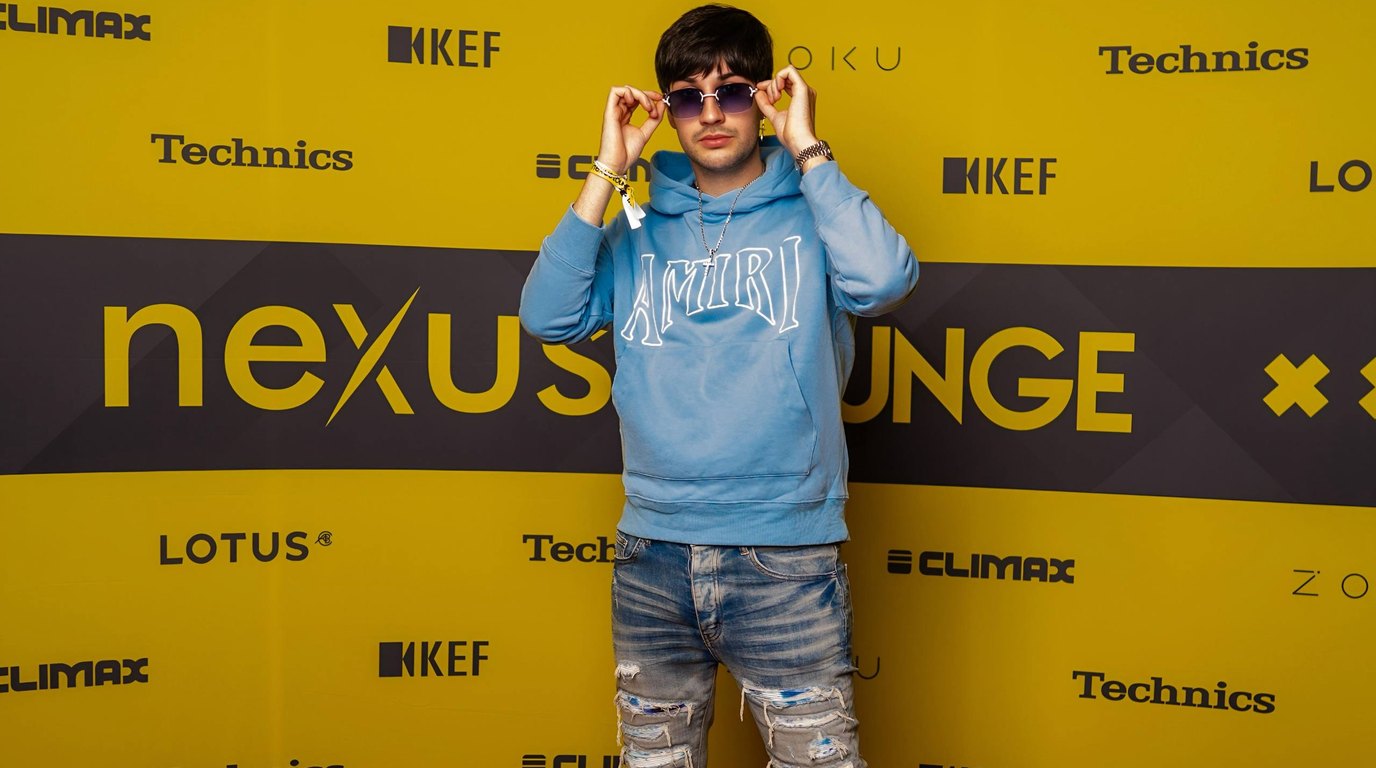 Editorial photography you can reuse for a year.
The honest answer is that "I make music" is not enough, because so does everyone else in the building.
The artists who get good coverage have at least one of:
- A current release. Something out in the last month, ideally. This is why release timing matters so much — we cover the sequencing in should you release a track around ADE.
- A specific point of view. An opinion about your scene that is actually yours and can be defended for ten minutes.
- A story that is not about music. Where you came from, what you did before, something genuinely unusual about how you work.
- A number worth mentioning. Not vanity metrics — something real and verifiable.
Prepare three stories before you fly. Not talking points, stories: things with a beginning and an end that take ninety seconds to tell. Interviews are edited, and the ninety-second story is what survives the edit.
The Assets to Have Ready
You will be asked for these, usually with less notice than you would like.
| Asset | Spec |
|---|---|
| Press photo | High resolution, recent, not a phone selfie |
| Short bio | 100 words, third person, no adjectives you cannot defend |
| One-line description | Genre plus one comparison point |
| Current release link | Loads fast on mobile |
| Social handles | Consistent across platforms — worth auditing before you go |
Based on 2,400+ campaigns run by our founding team, assets are the cheapest quality upgrade available to most artists, and the ones who have them ready convert opportunities the others watch pass.
Have these in one folder with a shareable link. The number of opportunities lost to "I'll send you a photo later" is genuinely absurd.
The ŌTOCRACY Artist Pass — Nexus Lounge, ADE 2026. €200, 25 only. This is route one, made concrete. An ADE ticket puts you in the city; an artist pass puts you in the studio. Lounge access, a Nexus Radio interview (usually 22-23 Oct), an editorial photoshoot, sponsor freebies, open bar for Ōtocracy members, publication on the Nexus site, amplification across ŌTOCRACY's channels all week, and Thomas on the day handling reception and introductions — the full list is here. You leave ADE with a published interview on an established outlet and a set of professional photos — assets that keep working for a year, which is more than most artists get from a €2,000 trip. Twenty-five passes, artists selected. The pass page has the full list and checkout — or message me on WhatsApp and I will tell you honestly whether it fits where you are.
What to Do With Coverage After ADE
Coverage that sits on a third-party site and is never used again is half-wasted.
- Put it on your own profiles — link the interview, use the photos as your press shots for the next year.
- Use it in pitch emails. "I was interviewed by [outlet] during ADE" is a credibility line that costs you nothing to include.
- Feed it into your paid campaigns. Professional editorial photography materially outperforms phone photography as ad creative, and it is one of the cheapest quality upgrades available — see our Meta ads guide for musicians for how creative quality moves cost per result.
- Keep it current. An interview from October is a strong asset in February and a weak one in the following August. Get new coverage annually.
Frequently Asked Questions
How do artists get interviewed at ADE?
Mostly through media lounges and pop-up studios that record interviews on site throughout the week, or by pitching outlets four to six weeks in advance with a genuine angle. Very little coverage happens spontaneously; nearly all of it is arranged beforehand.
Do I need a PR agency to get ADE coverage?
No. A PR agency helps for tier-one outlets, but media lounge slots, direct pitching and being a useful source to a working journalist are all accessible without one. Lead time and a real angle matter more than budget.
What is a media lounge at ADE?
A pop-up studio running during the event that records interviews and produces photo content with artists across the week, usually with sponsor-branded set areas. The Nexus Lounge, run by Nexus Radio, has appeared in ADE's official programme in previous editions.
What should I prepare for an ADE interview?
A current release, three ninety-second stories you can tell well, a specific point of view about your scene, and a folder containing a high-resolution press photo, a 100-word bio and a fast-loading link to your music.
Is press coverage at ADE actually valuable?
Its value is durable rather than immediate. The traffic from a single interview is usually modest; the asset — a published feature on an established domain, plus professional photography — supports your credibility and your ad creative for the following year.
Getting covered at ADE is not about being the most interesting artist in Amsterdam. It is about having something current out, three stories worth telling, a folder of assets ready to send, and a slot arranged before you land. Do that and you come home with something that keeps working. Improvise and you come home with photos of the outside of a venue.
The credibility you build in that week feeds directly into everything that follows — our campaign packages turn it into reach, and the free audit will tell you what your profile looks like to the journalist about to Google you.