Hardstyle Promotion: How Records Break in the Scene (2026)
Hardstyle promotion runs on events, not playlists. The Dutch and Belgian label routes, why the festival calendar sets your release date, and what wastes money.
Quick Answer
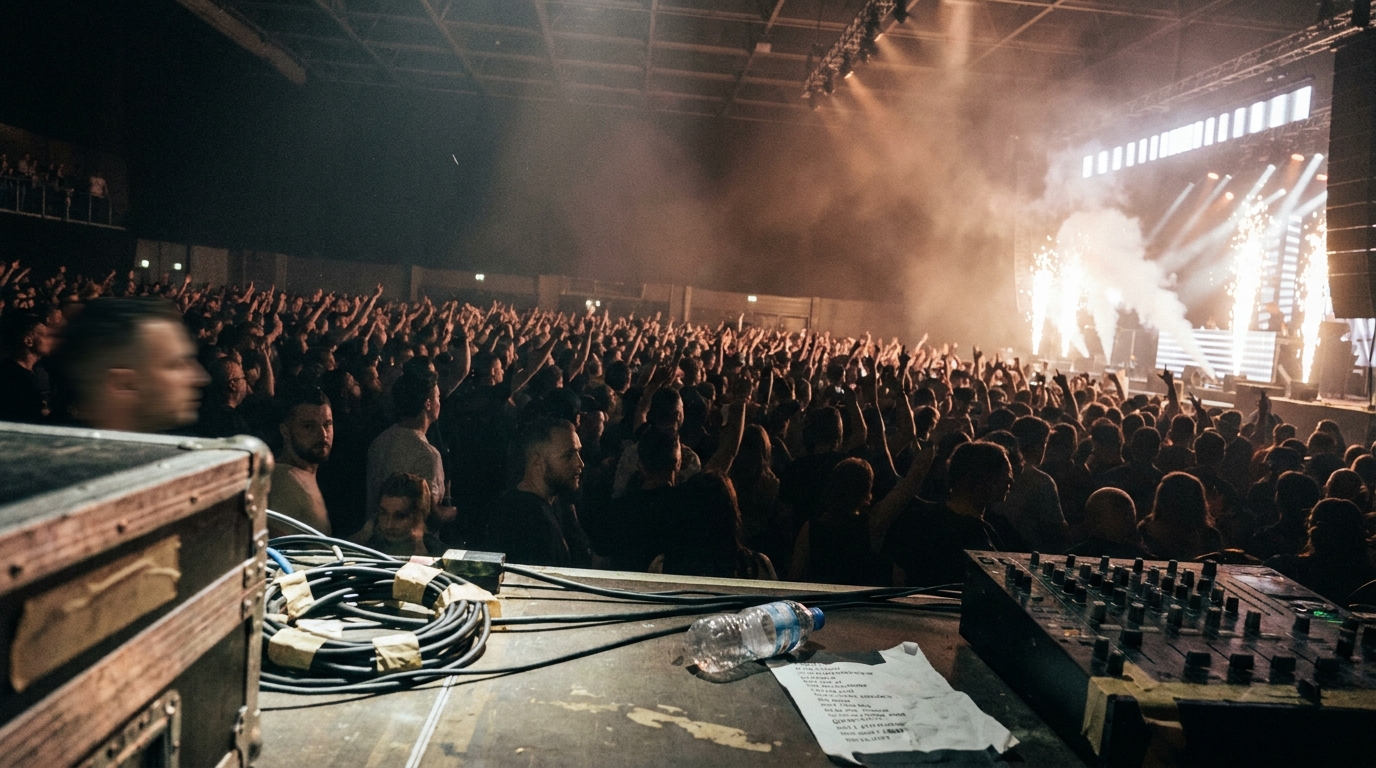
Hardstyle is the most event-driven genre in electronic music, and promoting it like house or techno wastes money. Records break through the festival and event circuit — Q-dance alone runs Defqon.1, Qlimax and Dominator — and through a small, dense label ecosystem concentrated in the Netherlands and Belgium: Scantraxx, founded by Dov Elkabas in 2002, along with Dirty Workz, Roughstate, Masters of Hardcore and Triple Six. That concentration is the whole strategic picture. There is no meaningful playlist economy to build on, the audience is loyal to events rather than to algorithms, and release timing is dictated by the festival calendar rather than by a Friday. Belgium matters more than its size suggests, with Reverze at the AFAS Dome in Antwerp and the Belgian edition of Sunrise Festival. Plan around events six months out, not around release day.
Hardstyle gets treated as a rounding error in music-marketing content, which is strange given the size of the rooms it fills.
Search for a guide to promoting it and you get Wikipedia articles about Defqon.1 and Scantraxx. Useful background, no strategy. Meanwhile the generic advice on offer — pitch playlists, post clips, run ads to a smart link — is built for genres that discover music in completely different places.
This is the version written for the scene as it actually works.
The Scene Is Small, Dense and European
Start with the structural fact that decides everything else: hardstyle's centre of gravity is the Netherlands and Belgium, and the number of people who matter is small.
That cuts both ways. Reaching the decision-makers is genuinely achievable — this is not a genre where you are competing for attention against every label on earth. But the flip side is that reputation travels fast and mistakes are remembered, because everyone knows everyone.
Belgium in particular punches above its weight, with one of the densest hard dance scenes per capita in Europe. Belgian producers typically route through Dutch imprints — Scantraxx, Dirty Workz, Roughstate, Masters of Hardcore — or through the Belgian label Triple Six, or they self-release.
| Hardstyle | Most electronic genres | |
|---|---|---|
| Discovery | Events and festival sets | Playlists and algorithms |
| Geography | Concentrated, NL and BE | Distributed |
| Label landscape | Small, well-known, interconnected | Fragmented |
| Release timing | Set by the event calendar | Set by the release calendar |
| Audience loyalty | To events and to the scene | To playlists and to artists |
Events Are the Distribution Channel
In most genres, a live show promotes the record. In hardstyle it is closer to the reverse: the record exists to work in a room.
Q-dance is the dominant event organiser in the harder styles, running Defqon.1, Qlimax and Dominator among others. Those events are not just gigs — they are where the scene's calendar, its anthems and much of its identity are set. In Belgium, Reverze at the AFAS Dome in Antwerp is Europe's biggest indoor hardstyle event, and Sunrise Festival's Belgian edition runs three days at De Lilse Bergen in June.
The practical implication is a different release calendar. A record aimed at a summer festival should exist, be tested and be in DJ sets well before the event — not released the week of it. Across the 2,400+ campaigns run by our founding team, the genres that punish late delivery hardest are the ones where a physical moment, rather than a platform, is the point of maximum attention.
Sub-Styles Are Not a Detail
The harder styles are not one genre, and treating them as one is the fastest way to mark yourself as an outsider.
Hardstyle, rawstyle, hardcore and hard trance sit at different tempos, serve different rooms and are played by largely different DJs. A promo list that treats them as interchangeable gets filtered, because the person receiving it can tell in five seconds that you sent the same thing to everyone.
The practical rule is the same one that applies in techno but bites harder here: segment your promo list by sub-style before you segment it by name recognition. Ten DJs who play your exact register are worth more than a hundred who play adjacent ones, and in a scene this size the ten are findable.
The same discipline applies to your own metadata. A record filed under the wrong sub-style competes in the wrong chart and reaches the wrong buyers, and correcting it after release is much harder than getting it right at delivery.
The Label Route
Because the label ecosystem is small and legible, targeting is easier here than almost anywhere else in electronic music.
The work is the same as any demo process, done properly: know what a label has released in the last six months, know which of your tracks fits their output rather than their reputation, and know who actually handles their A&R. The pre-pitch sequence covers the mechanics; what is genre-specific is that in hardstyle, a demo that is one BPM band or one sub-style off is immediately obvious to the person reading it.
The other genre-specific point: DJ support carries more weight in a demo here than streaming numbers. A record already being played by working DJs in the scene is the argument. A record with good Spotify numbers and no floor support is not, because the scene knows the difference.
Self-releasing is a legitimate route and a common one, particularly in Belgium. It is harder without an event network behind you, and it is the reason building relationships with promoters matters as much as building them with labels.
Promoters Are as Important as Labels
This is the part that transfers least well from other genres, and the part most artists underweight.
In a scene where events are the distribution channel, the people who book those events hold as much leverage as the people who sign records. A promoter who puts you on an early slot at a real event has given you something a label cannot: evidence that the record works in front of the audience it was built for.
Those relationships are built the unglamorous way — being present, being easy to work with, delivering on small bookings before asking for large ones. There is no shortcut, and in a concentrated scene there is also no anonymity: how you behave on a small booking is known before the next conversation.
Two practical notes. Early slots are worth taking, because they are where the scene watches for new names rather than where it turns up for headliners. And a set that works — read the room, do not force the record — matters more than a set that showcases you, because you are being assessed on whether you understand the floor.
What Does Not Work
Four things I watch people spend money on in this scene specifically.
Playlist campaigns as the primary strategy. There is no meaningful editorial playlist economy driving hardstyle discovery. Playlists follow the scene here; they do not lead it. Money spent there before you have floor support is money spent in the wrong order.
Generic EDM creative. The visual and sonic codes of the harder styles are specific, and content that reads as festival-EDM signals immediately that the artist is not from the scene. That is a credibility problem, not an aesthetic one.
Buying streams. Beyond the usual risks, it fails in a genre where the people who decide things are looking at whether DJs play you, not at a counter.
Ignoring the calendar. Releasing a festival record in November, or an anthem-shaped track with no event to attach it to, wastes the one structural advantage the genre gives you.
What Does Work
Get it played. By anyone credible, anywhere. A track that works in a room is the entire proposition, and everything else follows from evidence that it does.
Send promos properly, segmented by sub-style. Hardstyle, rawstyle, hardcore and hard trance are different rooms with different DJs, and a promo sent across all of them at once reads as someone who does not know the difference.
Be present at events. In a scene this concentrated, physical presence is not optional networking — it is how the relationships that matter are formed.
Own the audience directly. Hardstyle fans are among the most loyal in electronic music, which makes an email list worth more here than in genres with casual listeners. A free download gate converts that loyalty into something no platform controls, and the fan list guide covers what to do with it afterwards.
Where Stores and Streaming Fit
Not first, but not nowhere.
Beatport matters commercially in the harder styles as it does across dance music, and the mechanics are the same everywhere: sales in a rolling window, updated daily, with the pre-order rule as the main structural lever. The chart mechanics go through it, including the delivery cutoff that decides whether a release is even eligible for a store feature.
Streaming is where the scene's audience listens between events, which makes it a retention channel rather than a discovery one. Treat it accordingly: worth doing properly, not worth leading with.
The Honest Read on Scale
Hardstyle is a genre where a small, committed audience is worth more than a large indifferent one, and where the economics reflect that.
Across the 2,400+ campaigns run by our founding team, the artists who do well in concentrated scenes are the ones who stop comparing their numbers to genres with ten times the casual listenership. A hardstyle record with real floor support and a few thousand engaged fans is in better commercial shape than a house record with larger passive streaming numbers.
If you are not sure which shape you are in, the free audit reads where your listeners actually come from before you commit a budget.
Frequently Asked Questions
How do you promote hardstyle music?
Through events and DJs first. Get the record played in rooms and into sets, approach labels with that support as evidence, plan the release around the festival calendar rather than a standard Friday, and treat streaming as retention rather than discovery.
Which labels release hardstyle?
The ecosystem is concentrated in the Netherlands and Belgium. Scantraxx, founded by Dov Elkabas in 2002, is among the best known, alongside Dirty Workz, Roughstate and Masters of Hardcore, with Triple Six on the Belgian side. Many producers also self-release.
Do playlists matter for hardstyle?
Far less than in most electronic genres. There is no significant editorial playlist economy driving discovery here — playlists follow the scene rather than leading it, so playlist campaigns run before you have floor support are usually money in the wrong order.
When should a hardstyle record be released?
Around the event calendar. A record intended to work at a summer festival should be finished, tested and circulating among DJs well before that event, not released in the same week. The calendar, not the Friday, is the anchor.
Is Belgium important for hardstyle?
More than its size suggests. It has one of the densest hard dance scenes per capita in Europe, hosts Reverze at the AFAS Dome in Antwerp and the Belgian edition of Sunrise Festival, and most Belgian producers route through Dutch labels or the Belgian imprint Triple Six.
Does streaming matter in the harder styles?
As retention, yes. It is where the audience listens between events, so it is worth setting up properly. It is rarely where a hardstyle record is discovered, so it should not lead a release plan.
The Bottom Line
Hardstyle rewards understanding one thing: it is an events genre with a small, concentrated European centre, and the label and promoter network that matters is genuinely reachable.
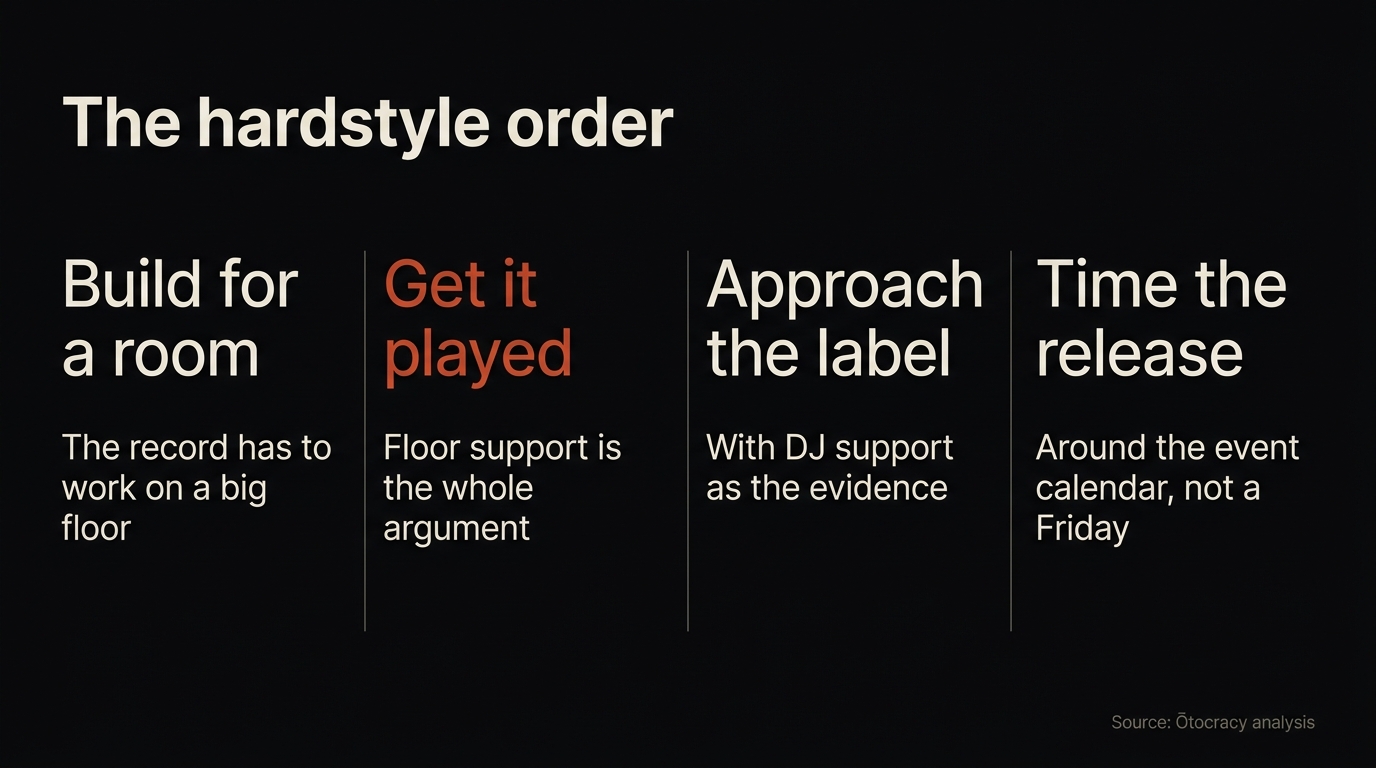
Build the record for a room, get it played, approach labels with that as the argument, and time the release around the calendar the scene actually runs on.
One number worth knowing before you pitch anyone: hard dance and hardcore artists get more plays per follower than any other scene we have measured, and the gap widens as accounts grow. The measurement is in hard dance has SoundCloud's most active audience, with the cross-scene tables in SoundCloud benchmarks by genre.
The wider genre picture sits in the complete EDM promotion guide, and if you want the paid layer run once the floor support exists, our campaign packages cover it.